
Cooking Master
Streamline meal planning process for people with visual impairment
IoT /Voice User Interface /Accessibility
PROJECT BRIEF
In this case study, I present "Cooking Master", an Alexa voice skill which solves some major problems faced by people with visual impairment in meal planning. As a UX designer from a linguist background, I Individually studied and followed the VUI principles and process to design this voice skill and its companion app.
Timeline: 2 weeks
Role: Research, Interaction, VUI Design
Tools: Sketch, Voiceflow(VUI Prototyping)
Deliverables: VUI Prototype, MVP UI
THE CHALLENGE

Source: https://vispero.com/
" 282 million people are visually impaired globally."
- World Health Organization
" Nearly 90% of visually impaired people stated that they disliked cooking because it is very time-consuming."
- Canadian Journal Of Dietetic Practice & Research
" The top cooking difficulties for those with visual impairments are accessing and following recipes."
- NDSU
THE SOLUTION
"Cooking Master" is an Alexa voice skill features :
-
Cooking Guidance Via Voice
-
Quick Recipe Suggestion
-
Ingredients Order & Delivery
Design Demo
WHY VOICE?
- Efficiency

VUI requires nothing other than a vocal command,
users can simply ask for cooking suggestions
instead of taping through a recipe App.
- Convenience

For people with visual impairment, listening and speaking are much more practical and convenient
rather than reading.
DESIGN GOALS
Based on user needs and business goals, below are the design goals I wish to achieve in this voice skill:

FAST
Quick and easy meal Recommendation.

FRUGAL
Find recipes based on available ingredients.

CONVENIENT
Step-by-step cooking instructions via voice.
INFORMATION ARCHITECTURE
Based on research insights, I created the following information architecture for this voice skill, which guides me to classify user intentions, weigh the different user options and consider its ramifications.

VUI PRINCIPLES
To ensure that the users can talk naturally with this voice skill and fulfill their needs. I studied some VUI best practices and follow the Alexa Design Guides to guide me through the design process.

Adaptable
VUI must adapt to the natural ways users might express meaning and intent in their own words (NLP).
.png)
Personal
VUI should personalize the user experience based on the degree of context (e.g. frequency of use.)

Available
VUI should handle different ways to trigger user intentions through definitive and brief choices.
CONVERSATIONAL DESIGN


CHALLENGE1: Natural language processing(NLP)
The major design challenge is that, in reality, people often express their needs using their own words, so how to make this skill understand users' intentions and allow them to speak naturally?

Alternatives for saying: "I need a recipe."
SOLUTION1:"SYNONYMOUS"
I created the synonymous for recipe needs and relate them to the predefined intent, so this voice skill is able to understand what users want no matter how they indicate their needs for a recipe.
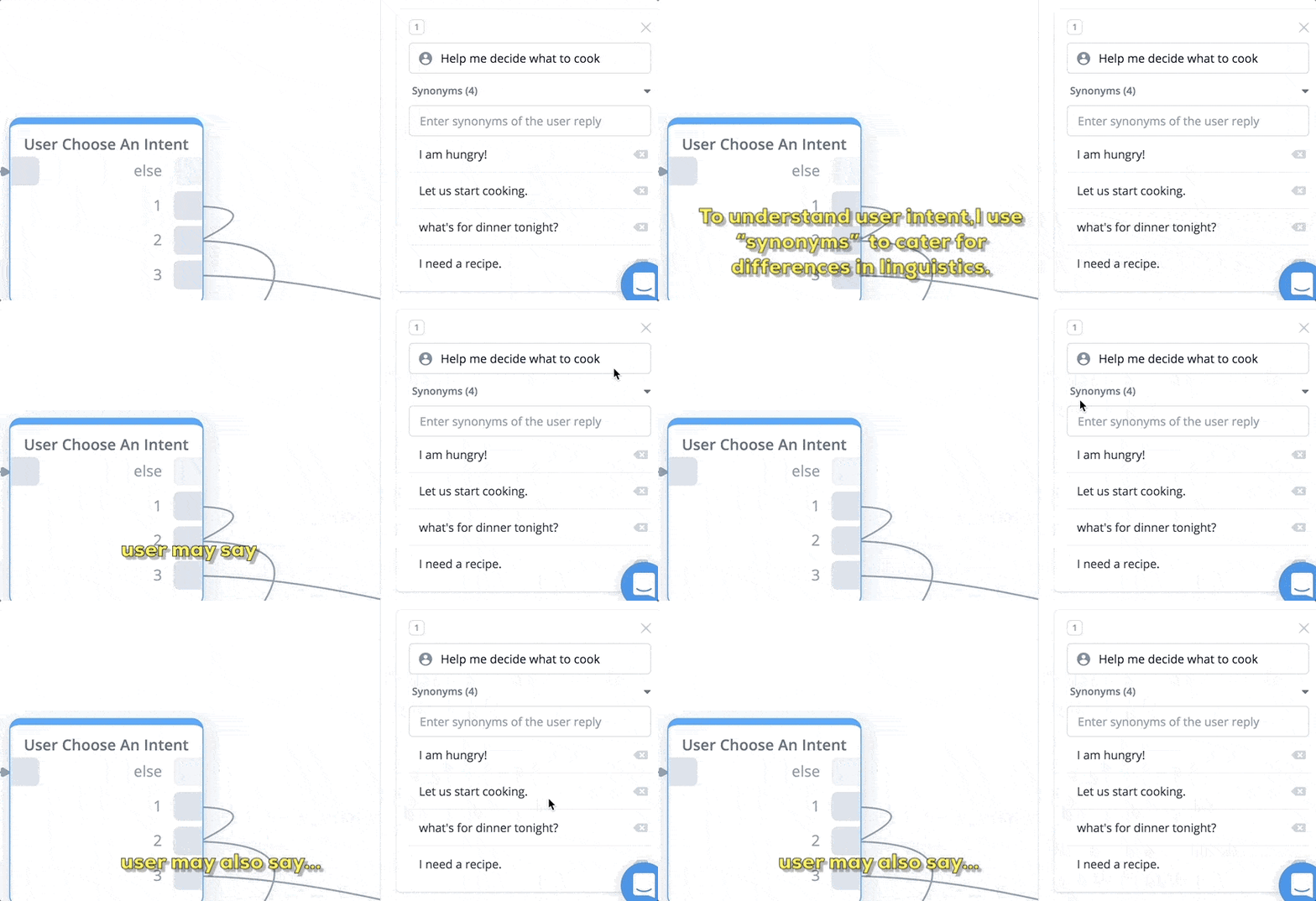
Synonyms
CHALLENGE2: BE PERSONAL
VUI should determine what information needs to be presented and what can be discarded based on users' personal context(e.g. users' needs for cooking instruction will change as he/she becomes more competent with a certain recipe..). so how to assess users' skill levels to present the relevant information?

Different prompts for the novice and expert user
SOLUTION2: "ADAPTIVE PROMPTS"
I use if/else statement here to generate the adaptive prompt to customize user experience (e.g. provide
detailed prompts for the new users and brief prompts for the return/expert users.).
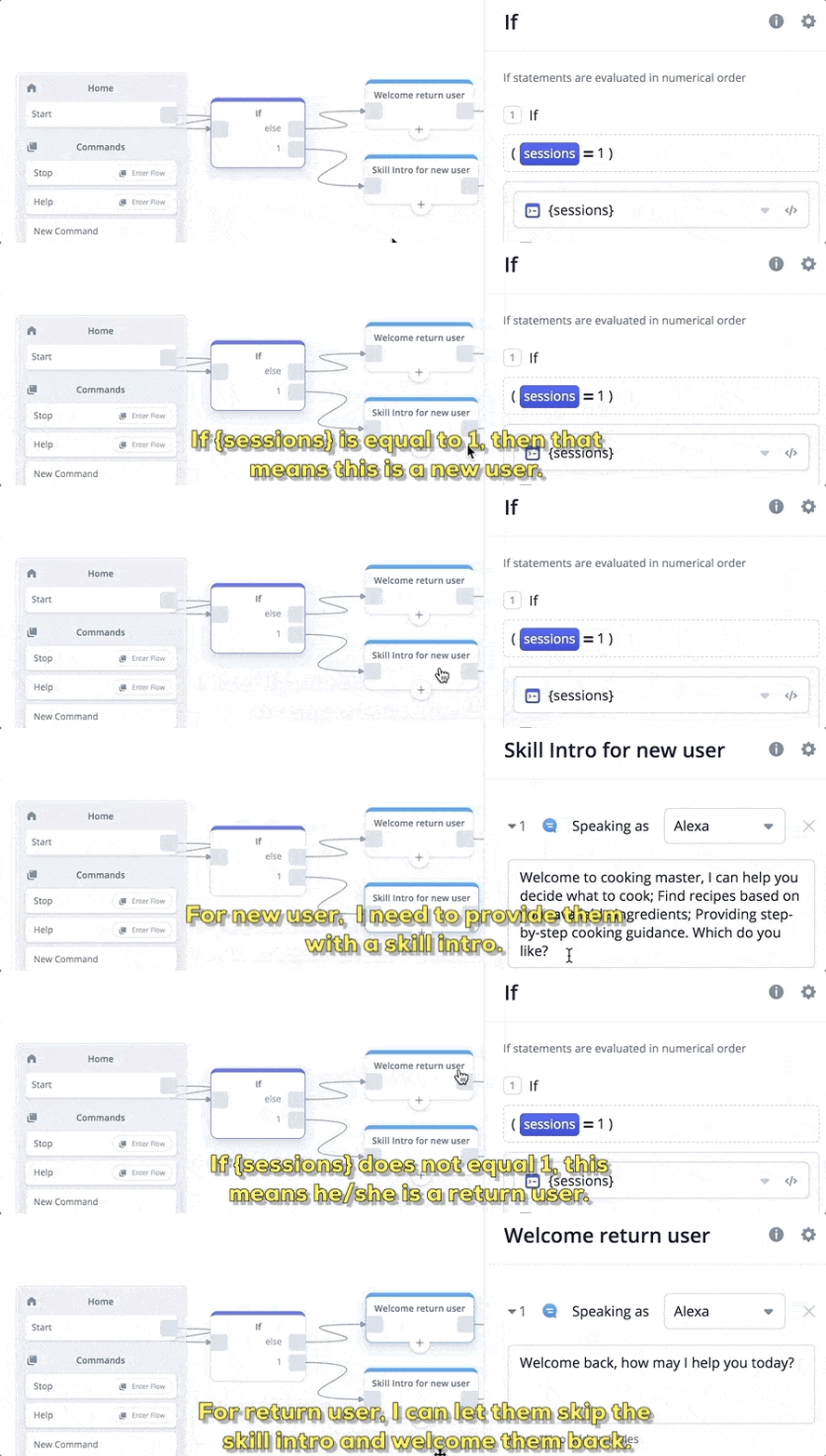
If/else statement
USER TESTING
I tested this VUI prototype with 6 people, 5 of them point out an important user need that I ignored previously: for recipe selection, participants prefer to see what the recipe looks like, rather than what it sounds like. Thus, I designed a companion app for this voice skill to address this issue.

Login

Recipe Category

Pair Phone With Alexa

View / Edit Order

Find Recipe

Track Delivery
RATIONALES BEHIND
Based on testing results and research, I found VUI becomes less efficient to handle complex tasks that require visual cognition (e.g. recipe selection, ingredients shopping ). Thus, to suit users' needs in different stages, it's important to understand when and what type of interface should kick in.
.png)


REFLECTIONS & OUTCOMES
Data-Driven Results
Leverage users' behavioral data (e.g. session times for specific recipes ) can provide an experience tailored to users' preferences and boost business growth.
Brief Prompts
Compared to GUI, users are more likely to forget the information by when interacting with VUI. Thus, voice prompts must be concise to provide "just enough" information without overwhelming users.
Build for empathy & AI
Results
This skill has been submitted to Alexa Skill Store for review, I have published this case study on medium. There is more space for improvements, please come back to check for further updates.
An area I haven’t examined in detail here is AI, as our daily conversion happens in a context and does not strictly base on logic, VUI should learn and adapt the changes of users' context and tailor the voice prompts.